A history of Cowdenbeath

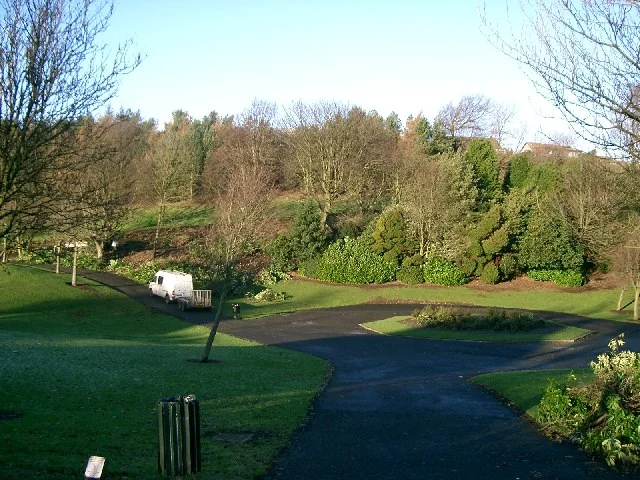
This town could have been called White Threshes. When the question came up again in 1890, Foulford was in the running. The farm that gave Cowdenbeath its name stood near today’s football pitch at Central Park.

Follow the timeline
Choose a year to see the High Street
Shoppers and parked cars on the High Street, with a British Rail sign on the bridge ahead.
High Street, 1988 Photograph by Ben Brooksbank
The High Street in 2024, with a broad paved forecourt beside the railway bridge.
High Street, 2024 Photograph by Richard Sutcliffe

What turned up at the seventeenth green

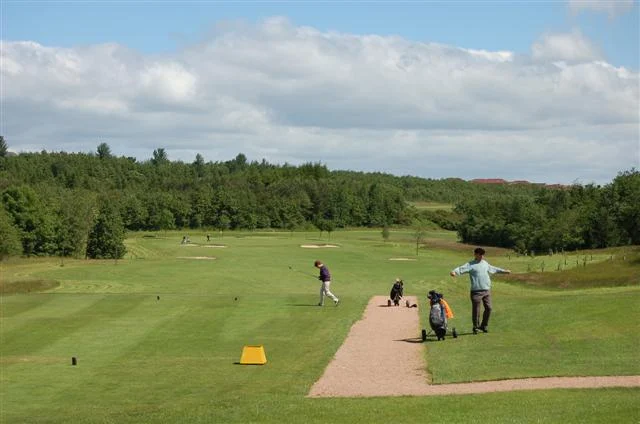
In 1927, men digging a bunker near Tollie Hill turned up pieces of pottery. The following autumn the greenkeeper and his assistant uncovered two more burials. Robert Holman, a local newspaper correspondent, gathered fragments that had been set aside. Archaeologist A. D. Lacaille identified at least six Bronze Age urns.

Twisted cord left zigzags in the clay of one urn. Another had a pattern of cuts. A newspaper mistook a cross and the stroke beside it for the Roman numeral XI and reported a Roman find. Figure 2 in Lacaille’s report shows the pattern. Near the fourth urn he also picked up a worked flake of green pitchstone from Arran.

Holman took the pottery to John Veitch, a Cowdenbeath doctor. An undated newspaper report, “Bronze Age Relics Found at Cowdenbeath”, records the town council’s decision to accept the finds from Holman. His 1941 history of the burgh follows two of the urns after they were pieced together. They went on show in Glasgow and London before coming home to Cowdenbeath.

An axehead with an uneven blade

A metal detectorist found a complete flat axehead in Beath parish. Archaeologist Alison Sheridan thought one side of the blade might have come up short when the metal was poured into the mould.

Four farms and a choice of name

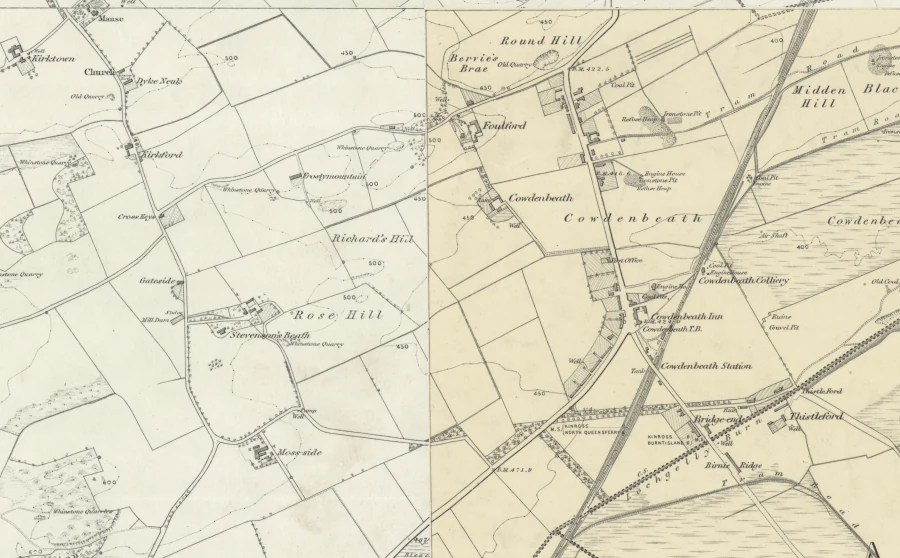
A Dunfermline court book records Codane Beitht in 1507. On this map, made some 350 years later, Cowdenbeath is still the name of a farm. Residents chose that name for the growing town at a public meeting. A second meeting in 1890 kept it for the new burgh. The Community Council's 1991 account names four districts. Robert Holman's 1941 history also names Moss-side and its farm.

On the 1850s map, Kirkford lies west of Foulford and Cowdenbeath farm. A modern marker places Central Park south-east of Cowdenbeath farm. The Burntisland road continues south-east towards White Threshes.
Fife in the 1850s. The blue ring marks the centre of today’s football pitch. The arrow follows the Burntisland road towards the area Robert Holman identifies with White Threshes. First-edition Ordnance Survey map, cropped and labelled. Reproduced with the permission of the National Library of Scotland (CC BY 4.0).
Kirkford
South of Beath Kirk, the old road crossed the Foulford Burn at a ford. On the map, follow the road from the church down to Kirkford.
Foulford
The farm lay just south of Foulford Road. Its Scots name means a muddy ford.
Cowdenbeath
The farm that gave the town its name stood near the ground that became Central Park. Compare its fields with the football pitch on the Central Park maps.
White Threshes
Holman places the farm on the Burntisland road at the old burgh boundary, near a hall that people knew as the Ritz. The arrow points down that road.

Why the Chicago of Fife?

When Queen Victoria passed through Cowdenbeath in 1842, her coach stopped for fresh horses. Six years later the village had a railway station. Around 1850, men digging for ironstone struck coal. The pits brought families here for work. By 1890 the town had a council of its own.

The 1901 census counted 7,466 people. At a public meeting, Bailie Laing likened the town’s growth to Chicago’s. The burgh’s 1941 history says the audience laughed when Laing went on to liken the High Street to Princes Street in Edinburgh.

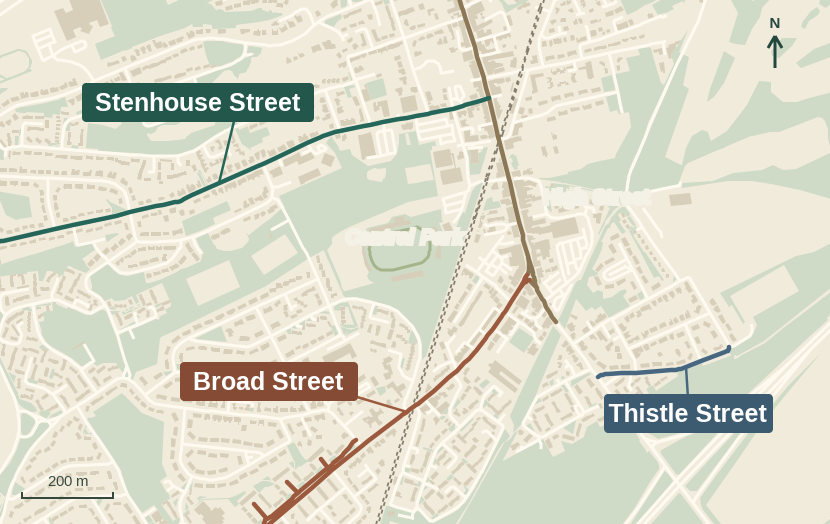
Room for 550 children on Broad Street

When Cowdenbeath’s new public school opened on 14 February 1876, Beath Parish School Board needed places for 400 children. Its chairman, A. Landale, told the people gathered there that three parish schools would come together. The board had built for 550, with a house for the teacher in the north-west corner of the playground.

One of the pupils who went on to teach at the school was Mrs E. Watson. In 1911 she joined the Beath School Board. Holman credits her with persuading it to give pupils their schoolbooks free. Three years later she chaired the board.

Concerts to light the High Street

Before the council took charge of street lighting, people came to the old Colliery School in Broad Street for weekly concerts called Penny Readings. Robert Holman records that the takings paid for a few lamps. On moonlit nights the lamps stayed out. By 1894 the High Street had twelve gas lamps. The burgh paid ten shillings and threepence a year for each one.

Why the ambulance took the long way to Dunfermline

In 1903 the Cowdenbeath Public House Society gave the town a horse-drawn ambulance. Its electric lamps ran on batteries so heavy that the crew risked losing control on Halbeath Hill. Holman says they went round by Dhuloch to reach Dunfermline Hospital. After the First World War, former servicemen each had five shillings of canteen profits to give away. Enough of them signed theirs over to buy the town a motor ambulance.

Two families on Foulford Place

On 2 December 1916 the Dunfermline Journal counted thirteen war casualties on this one Kirkford street in its report “Houses of Mourning”. Brothers John and Robert Bell had both joined the Black Watch. Their wives shared a house while the men were away, and each was left with three children. At number 44, Thomas Hughes received word that his son William had died. He had already lost another son, also named Thomas, in March.

An anarchist bookshop on the High Street

In March 1918 Cowdenbeath’s anarchists asked readers of Freedom for help finding premises. By the April issue they had a High Street address and stock ready to browse.

Mary Docherty remembers the 1921 strike

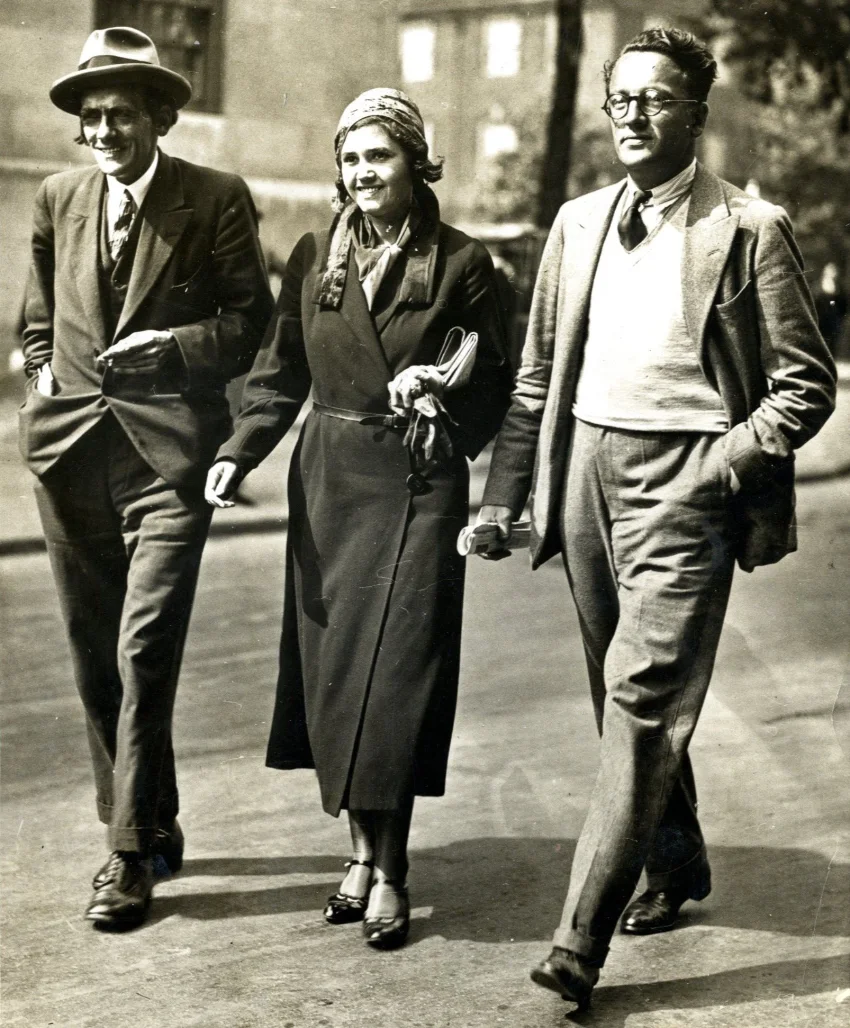
Mary Docherty was thirteen when the army came to Cowdenbeath during the miners’ strike. In a 1992 interview for The Independent, she told Mary Braid about the police charging the pickets and the street lights going out. Her father William had gone underground at fourteen. At home he wrote political plays, and Mary acted in them.

A spectator takes the field at Hill of Beath

During the 1921 miners’ dispute, the Hill of Beath Seniors played the Seaforth Highlanders at Keirs Ground. When a soldier went off injured, it was the home side who asked for a substitute.

Why Beath High went to Kirkford

In 1936 the Secretary of State for Scotland told Parliament that mining subsidence had closed Beath Secondary School. When the search for a new site began in the 1950s, the Coal Board ruled out a plot near the entrance to No. 7 Pit. Cowdenbeath Town Council offered land at Kirkford that it had set aside for houses. Pupils were already at their desks by the time the new school officially opened on 12 October 1964.

The peat railway at Moss Morran

South of town, wooden wagons carried air-dried peat to a mill that supplied gardeners. After a fire in 1977, a rebuilt locomotive took up the work.

A doctor’s house calls from Perth Road

Dr John Boyd Primmer practised in Cowdenbeath from 1902 until 1939 and served as provost. By 1916 his surgery was at Struan Bank, 74 Perth Road. A chauffeur-driven green Armstrong Siddeley features in a family memory of house calls. The family knew the doctor in the car as Jacob Primmer. Jacob was John’s father’s name, so the car cannot be securely linked to John.

From Moss-side School to the ice at Richmond

Doreen Spowart first skated at Dunfermline Ice Rink. In March 1952 the former Moss-side pupil went to Richmond to train. By November she had taken third place in an international competition there. At eighteen, she scored 749 points in a final of ten skaters. The Courier and Advertiser pictured her on the ice in “Lochgelly girl’s skating triumph”, on page 3 of its 19 November edition.

Glen Michael at the gala

In 1980 Mary Mathie, Cowdenbeath’s Citizen of the Year, shared an open-top Rolls-Royce with the man the bairns knew from Cartoon Cavalcade. Glen came back for the 1981 gala.

The High Street’s champion haggis

In 1981 the Scottish Haggis Champion was Andrew Gronbach, a third-generation Cowdenbeath butcher.

A night at the Palais

In the 1960s you could go roller-skating at the Palais de Danse or meet your pals there for a night of live music. The Who played on 6 October 1965. The hall’s floor plan puts the orchestra platform at one end of the dance floor, with the cloakroom just round the corner.

Wednesday nights at Central Park

The Fife Lions beat the Colonial Tigers at Central Park on 5 May 1965. Motorcycle speedway filled the next three Wednesdays too. By the last race night of the month, the riders were competing for a place in the world championship.

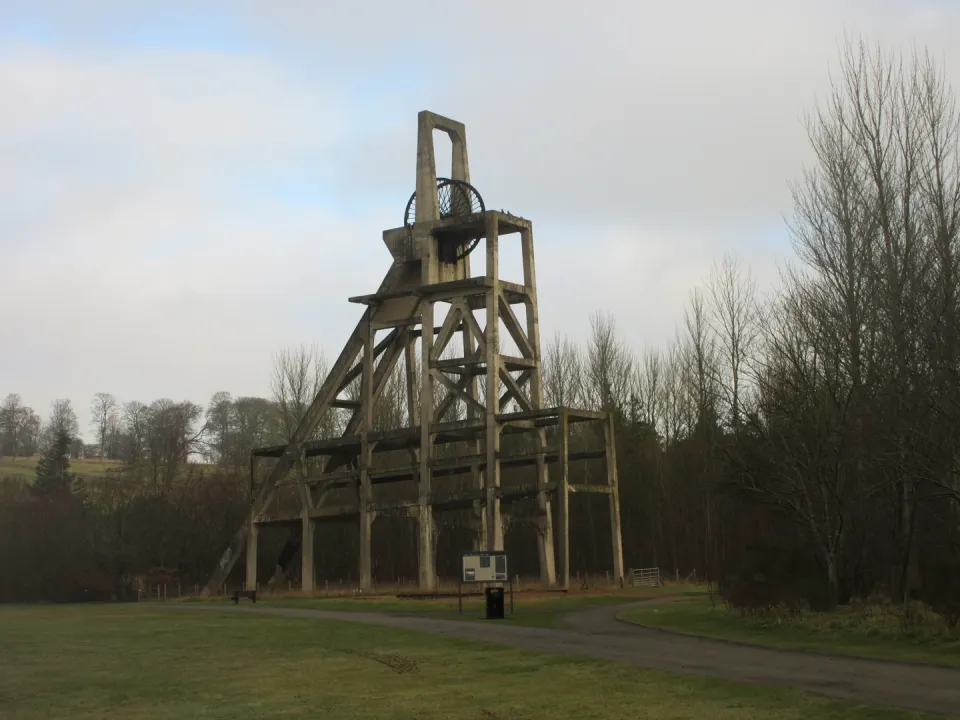
The tall concrete winding frame of Mary Pit above grass and trees in Lochore Meadows.
Lochore Meadows, 2025 · Scott Cormie

The headframe at the Meadies

Mary Colliery closed in 1966. The concrete frame that once carried winding gear above its second shaft still stands in nearby Lochore Meadows. Compare the 1983 view, with a little green locomotive beneath it, with the frame in the park today.

Walking the old Fordell railway

The Fordell waggonway carried coal from the Cowdenbeath and Crossgates pits to ships at St David’s Harbour. After the rails came up, walkers could follow the line from Cowdenbeath to Mossgreen, passing through a tunnel under the Crossgates–Kirkcaldy road. In Allan Moyes’s 1973 photograph near Fordell, grass fills the space between the field fences where the track once ran.

Start the Cowdenbeath Heritage Walk at the station sign. Turn at the Fountain to see Kerry Wilson’s painted gables in Brunton Square and Green Square. The full walk takes in the war memorial and Public Park before returning to the station. Find the murals

On the High Street you could borrow a book at Garvie’s lending library. On Moss-Side Road, Walker Brothers supplied sand and stone to Woodend Garage. Look up shops and trades by name, address or year.

Mary Docherty wrote about growing up in a miner's family. Jim Hutcheson collected photographs of the streets and the collieries. Browse the Cowdenbeath book reviews and reading notes.